
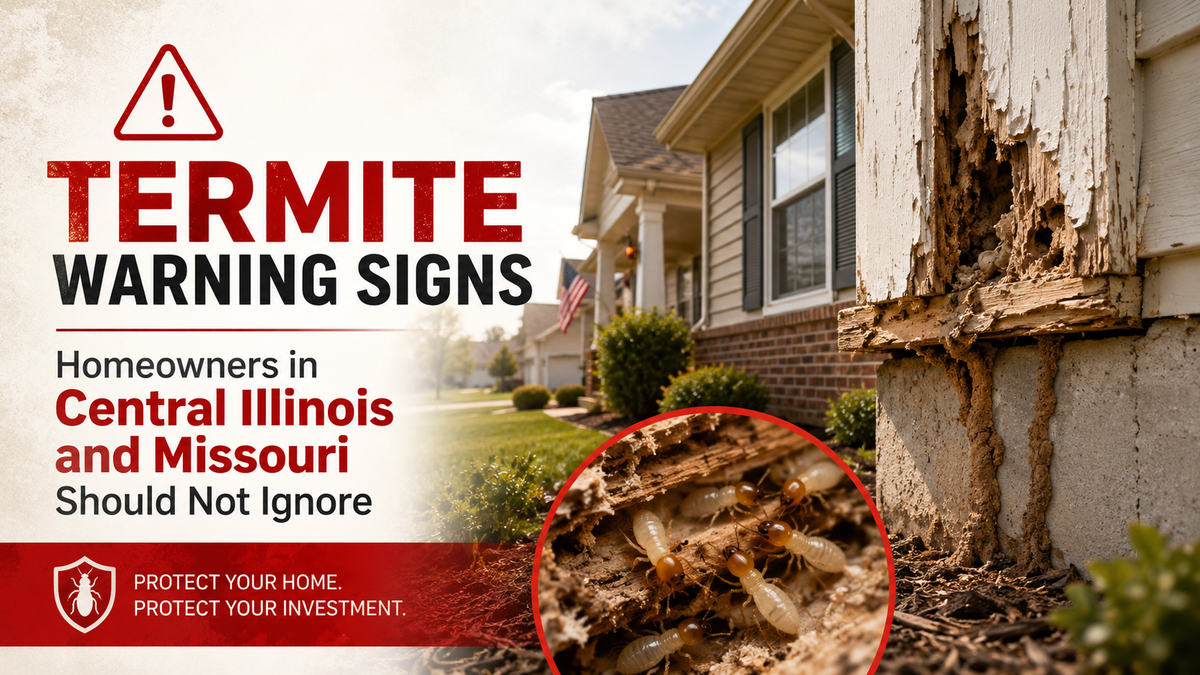
Termite control in Central Illinois and Missouri starts with knowing what to look for. Most homeowners do not see termites walking around the house. They usually notice the damage first, or they spot small warning signs that something is wrong.
That is the problem with termites. They can work behind walls, under flooring, around crawl spaces, and inside wood before you realize they are there.
If you live in Quincy, Jacksonville, Beardstown, Hannibal, Kirksville, Macon, Bowling Green, or nearby areas, it is smart to know the signs early.
Elite Termite & Pest Control offers free termite inspections for homeowners across Central Illinois and Missouri. If something looks off, it is better to have it checked before the damage gets worse.
1. You See Mud Tubes Around the Foundation
Mud tubes are one of the biggest termite warning signs.
They often look like thin dirt tunnels running along:
Foundation walls
Basement walls
Crawl space supports
Garage edges
Porch posts
Exterior brick or concrete
Termites use these tubes to move between the ground and the wood in your home.
If you see them, do not scrape everything away and forget about it. Take a few photos, then call a termite professional. The tubes can help show where the activity may be coming from.
2. You Find Wings Near Windows or Doors
Another common sign is a pile of tiny wings.
You may notice them near:
Windowsills
Sliding doors
Basement windows
Light fixtures
Porch doors
Garage entry points
This can happen after termites swarm. A swarm means a mature colony may be nearby.
A lot of people mistake termite swarmers for flying ants. That is normal. They can look similar at first glance.
The safest move is simple. Do not guess. Book an inspection and let a trained technician identify the pest.
3. Wood Sounds Hollow When You Tap It
Termites eat through wood from the inside.
That means the outside of the wood may still look normal while the inside has damage.
You might notice:
Hollow sounds when tapping trim or beams
Weak spots in flooring
Soft baseboards
Damaged door frames
Sagging wood around crawl spaces
This does not always mean termites, but it is worth checking. Moisture, age, and other wood-damaging pests can also cause problems.
4. Doors or Windows Start Sticking
Doors and windows can stick for many reasons.
Humidity can cause wood to swell. Old houses can shift. Paint can build up.
But termites can also damage wood around frames. That damage can make doors and windows harder to open or close.
Watch for this if it happens along with other signs, like:
Wings
Mud tubes
Soft wood
Bubbling paint
Cracked trim
Small piles of debris
One sign alone may not tell the full story. A few signs together are a reason to call.
5. Paint or Drywall Starts Bubbling
Termite damage can sometimes look like water damage.
You may see:
Bubbling paint
Warped drywall
Small cracks
Sunken areas
Peeling surfaces
This is easy to ignore at first. A homeowner may think it is just moisture or an old wall.
But if the area is close to wood, flooring, a crawl space, or the foundation, get it looked at.
6. You Notice Damage in the Crawl Space
Crawl spaces are common trouble spots.
They can hold moisture. They can have wood close to soil. They are also easy to forget because most homeowners do not check them often.
Termites like places where they can stay hidden.
Common crawl space warning signs include:
Soft wood supports
Mud tubes
Moisture problems
Damaged joists
Sagging insulation
Pest droppings
Wood that looks thin or damaged
If your home has a crawl space, an annual termite inspection is a smart habit.
7. You Tried DIY Spray and the Problem Came Back
Store-bought sprays can kill pests you see.
But termites are different.
The real issue is usually the colony. If the colony stays active, the damage can continue even if you killed a few visible insects.
DIY termite treatment can also make the problem harder to track if it pushes activity into another area.
If termites are possible, call a pro before spraying random products around the house.
Why Termites Are a Big Deal
Termites are not just annoying.
They can damage:
Floors
Wall framing
Support beams
Trim
Door frames
Porches
Garages
Crawl space wood
The longer they go unchecked, the more expensive the repairs can become.
That is why a free inspection is worth it. You get a clear answer without guessing.
What Happens During a Termite Inspection?
A technician will look for signs of termite activity and termite damage.
They may check:
Foundation areas
Crawl spaces
Basement walls
Exterior wood
Porch areas
Garage edges
Window and door frames
Moisture-prone areas
After the inspection, you should know what was found, what it means, and what treatment options make sense.
No guessing. No panic. Just a clear plan.
Why Call Elite Termite & Pest Control?
Elite Termite & Pest Control is a local, family-owned pest control company serving Central Illinois and Missouri.
Homeowners call Elite because they want:
A local team
Free inspections
Licensed and insured technicians
Affordable pricing
Termite experience
Honest answers
Help from people who know the area
If you live in Quincy, Jacksonville, Beardstown, Pittsfield, Mt Sterling, Nauvoo, Hannibal, Macon, Kirksville, Bowling Green, or nearby communities, Elite can help inspect your home and explain the next step.
Book Your Free Termite Inspection
If you see termite warning signs, do not wait and hope it goes away.
Call Elite Termite & Pest Control today at (217) 242-7909 or request a free estimate online.
A short inspection now can save you from a much bigger problem later.
Frequently Asked Questions:
What is the first sign of termites?
Common early signs include mud tubes, small piles of wings, hollow-sounding wood, bubbling paint, or wood that feels soft.
Are flying ants and termites the same?
No. They can look similar, but they are different pests. A technician can identify what you are seeing.
Should I spray termites myself?
It is better to book an inspection first. Spraying visible insects may not solve the colony problem.
Does Elite Termite & Pest Control offer free inspections?
Yes. Elite Termite & Pest Control offers free inspections in its Central Illinois and Missouri service areas.